I participated in a geo-tour organized by the Mikasa Geopark Promotion Council.
This time, we gathered at the Mikasa City Museum and took a tour that included visits to the Shin-Katsurazawa Dam, Genseki-yama, and the Mikasa City Museum.
1. Shin-Katsurazawa Dam
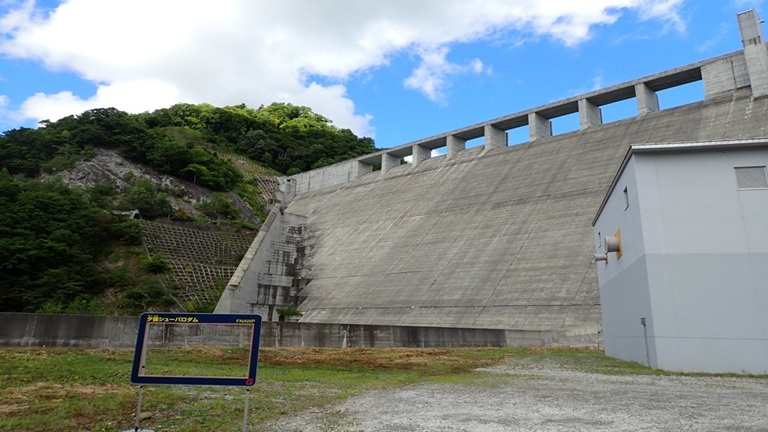
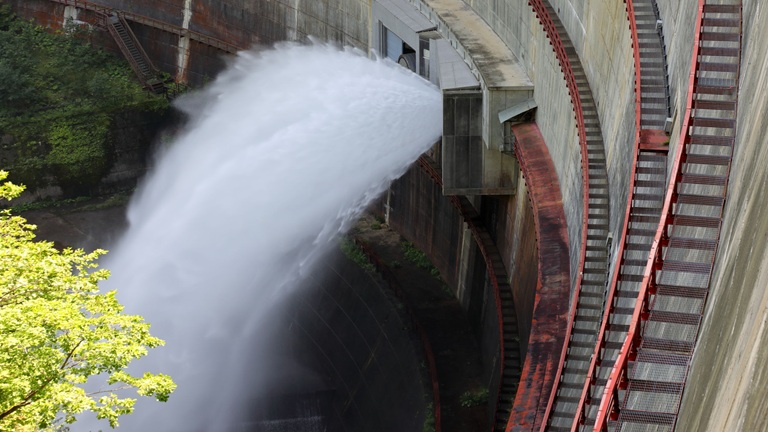
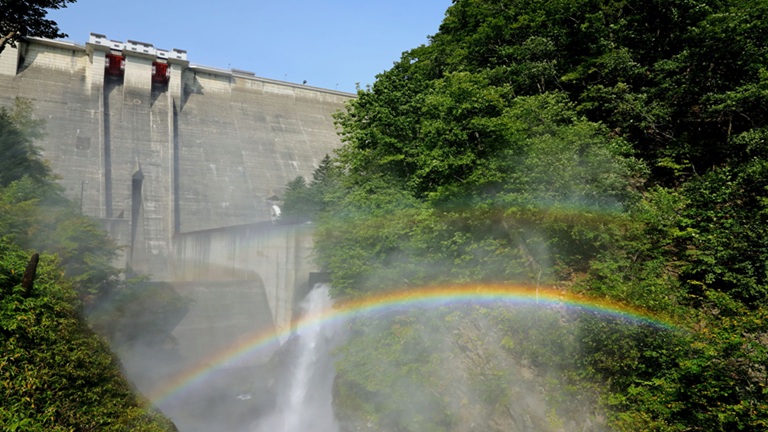
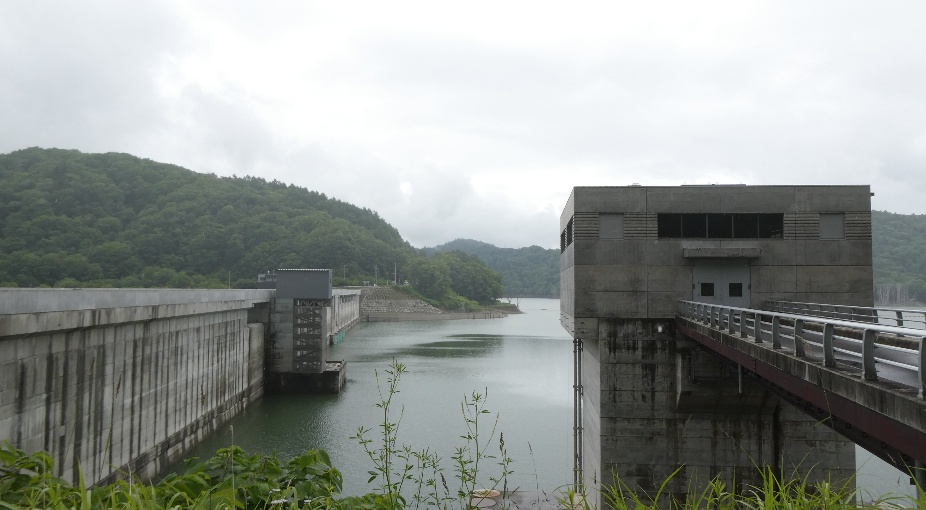 The Shin-Katsurazawa Dam was constructed by raising the original Katsurazawa Dam by 11.9 meters to enhance its flood control and water supply functions. It was completed in March 2024. Raising an existing dam is one method used in dam redevelopment projects.
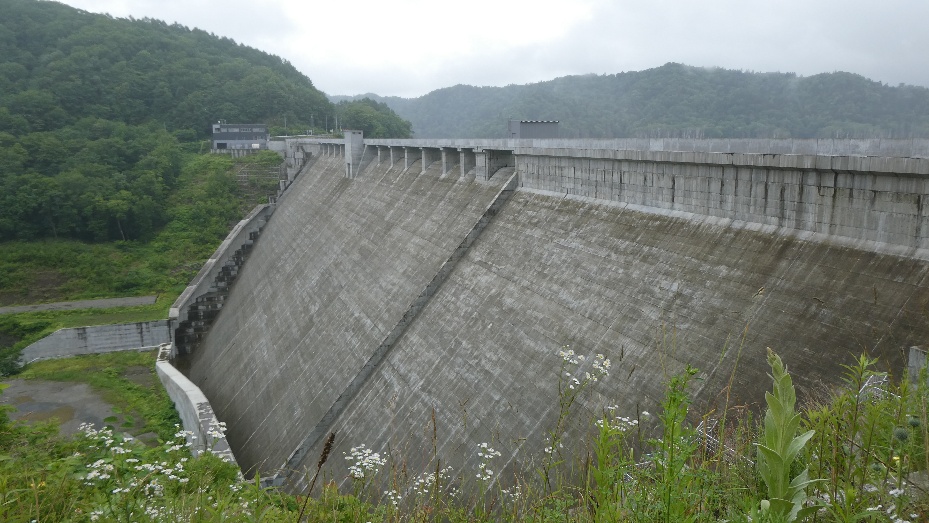 To ensure the dam’s stability, new concrete was poured in the downstream section during construction. This is not visible to the naked eye.
As part of the dam raising project, the management office building was also relocated from the left bank to the right bank of the dam site.
2. Genseki-yama
Genseki-yama is a mountain where raw materials—aggregates (gravel and sand)—used as ingredients for the concrete in dam construction are extracted. It is located on the left bank of the Shin-katsurazawa Dam. Access is normally restricted.
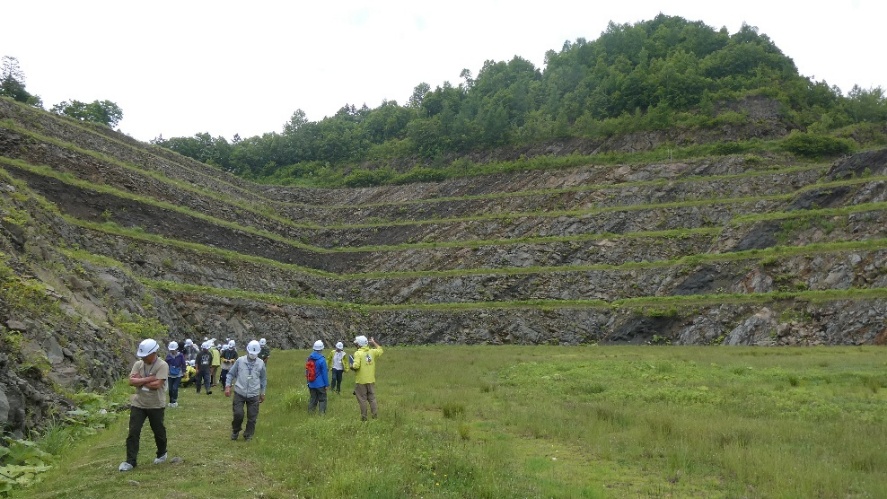 This is a quarry site on the Aggregate Mountain. Various geological strata are exposed here.
To learn why some strata are horizontal while others are slanted, we highly recommend joining a tour to find out for yourself.
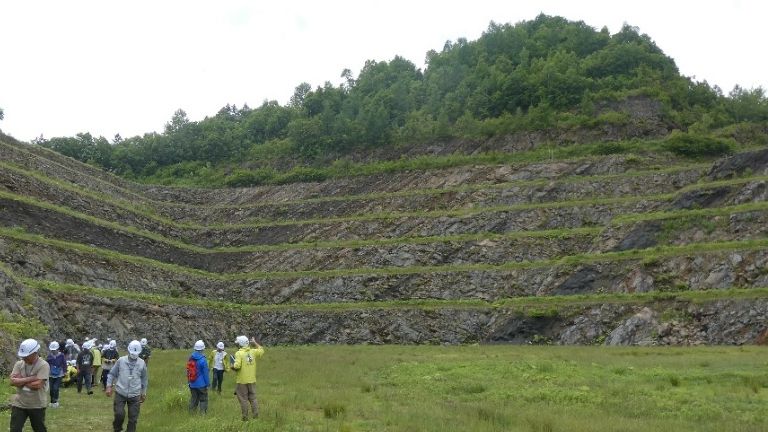
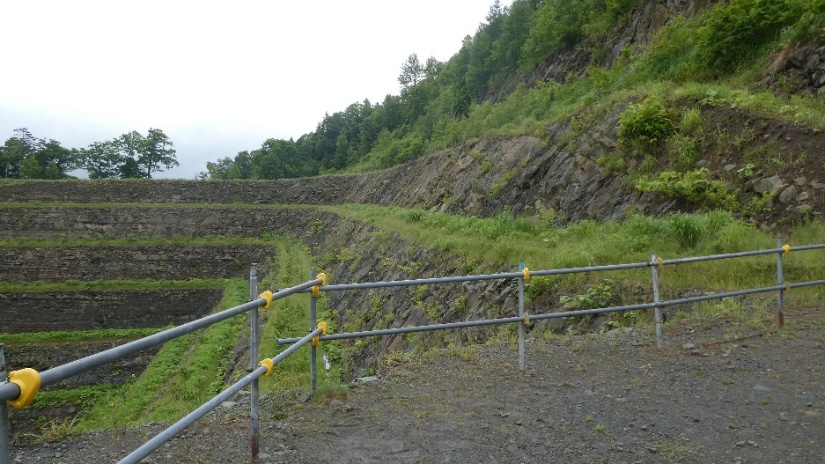 We climbed to the top of Genseki-yama.The excavated surface is terraced.
The upper section was sampled during the construction of the Katsurazawa Dam, and the lower section was sampled during the construction of the New Katsurazawa Dam.
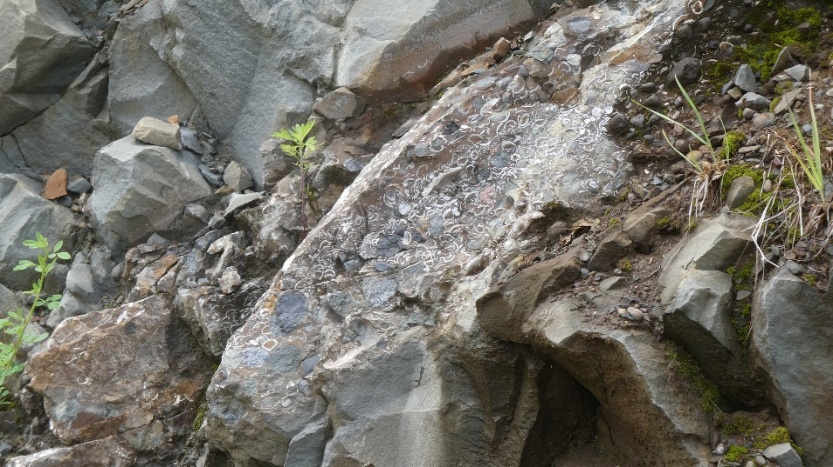 At Genseki-yama, you can see the Mikasa Formation—a geological stratum that was deposited on the ocean floor 100 million years ago.
Numerous bivalve fossils are exposed here.
3. Mikasa City Museum
Fifty years ago, a fossilized skull of an Ezo-Mikasa-ryu (a Natural Monument) was discovered within the city. It is said that this discovery led to the establishment of the museum.
The museum displays approximately 600 ammonites and is said to be Japan’s premier ammonite museum. As soon as you enter, you’ll be overwhelmed by a giant ammonite!
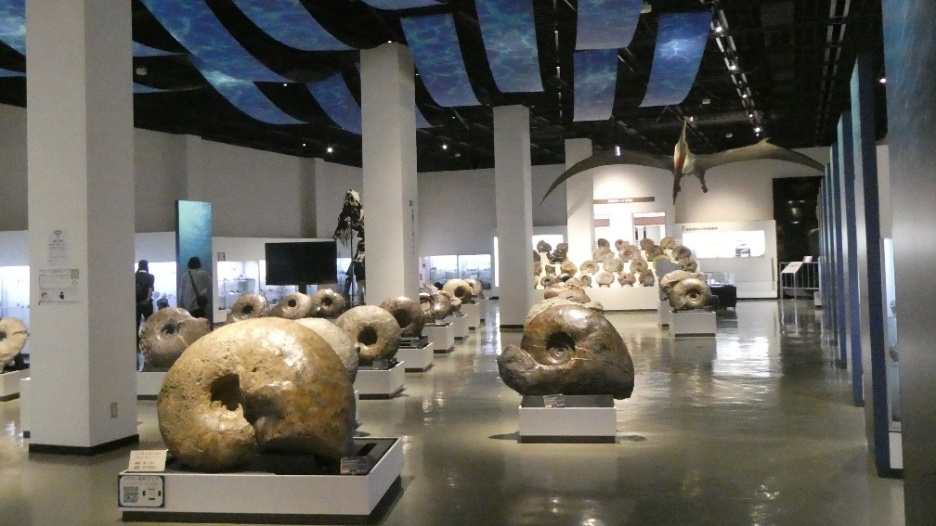 Fifty years ago, a fossilized skull of an Ezo-Mikasa-ryu (a Natural Monument) was discovered within the city. It is said that this discovery led to the establishment of the museum.
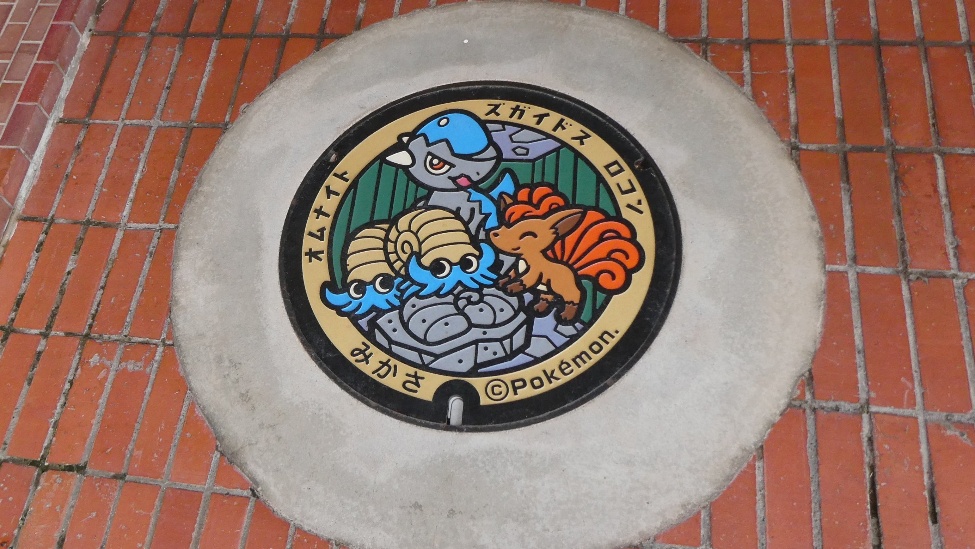 At the museum entrance, a Pokémon manhole cover welcomes you.
◆Later this year, we have planned geo-tours that will visit the Shin-Katsurazawa Dam and the Mikasa-Ponbetsu Dam, which is currently under construction. We hope you’ll join us!
◎July 31 and August 22 (Saturdays) → Let’s MIKASUP! SUP Experience Geo-Tour
◎August 1 → Shin-Katsurazawa Dam and Mikasa-Ponbetsu Dam Tour 2026 Summer
◎September 5 → Shin-Katsurazawa & Mikasa-Ponbetsu Dam Tour (2nd Session)